

Board 7. Point Car Park
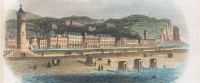
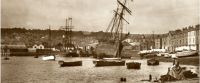
The River Teign rises in the peaty bogs of Dartmoor and flows 61 miles to its estuary. Shifting sandbars, silting and strong currents have always presented a challenge to both local and visiting sailors, making it necessary for the Teignmouth pilot to assist large cargo ships to enter and leave the port. A lighthouse to assist in navigation was built in 1845.
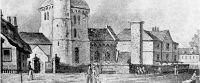
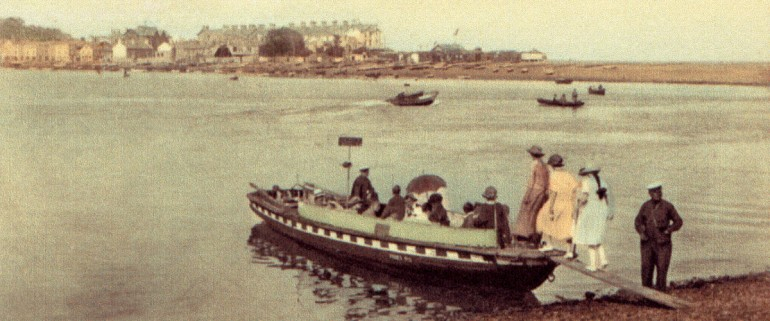
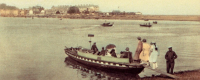
The ferry, running between Teignmouth river beach, (near the Lifeboat Station) and Shaldon has a very ancient history. It was the only crossing point east of Newton Abbot.
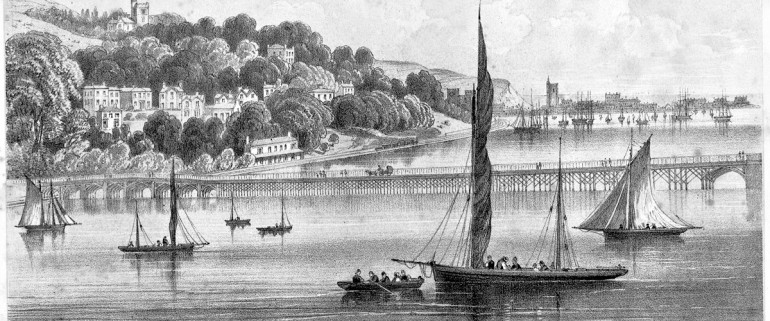
In 1827 the first bridge linking Teignmouth and Shaldon was opened. Built mainly of wood and 1,671 feet in length it was said to be the longest in England.
During the Napoleonic Wars 68 vessels were built in the area’s shipyards and that tradition was carried on until fairly recent times.
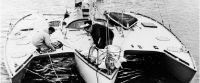
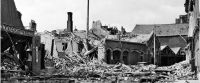
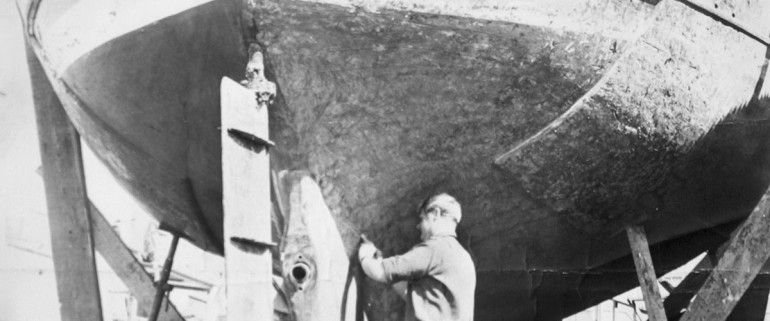
The last shipyard, Morgan Giles, was situated where the Morgans Quay flats now stand. It had a worldwide reputation for building luxury yachts and motor cruisers. During WWII over 100 vessels were built for the Admiralty by a workforce of 150. The yard also operated as an American repair base. It is no wonder that Teignmouth was a target for Hitler’s bombers.
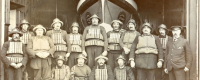
The Lifeboat service was established in 1851 - the first such station on the South Devon coast. It became part of the newly formed R.N.L.I. in 1854.
Your next boards

Board 8. The Ship Inn
The inns along the River Beach are some of the earliest in Teignmouth. The ‘Ship Inn’ has a history dating back to the 1830s when it was originally known as ‘The Pilot’.

Board 9. Trafalgar Names at Ship Inn
The 14 Teignmouth men who fought in the battle of Trafalgar.